The Equine Hindgut
For a millenia, horses evolved to efficiently digest and utilize energy from fiber. Their ancestors were small, forest-dwelling creatures barely the size of a fox. As the world changed, equids adapted to a landscape with vast plains. Over time, the ancestors of the modern horse evolved with elongated heads to accommodate more cheek teeth to slice coarse grasses and a digestive system that made the most of this adaptation.
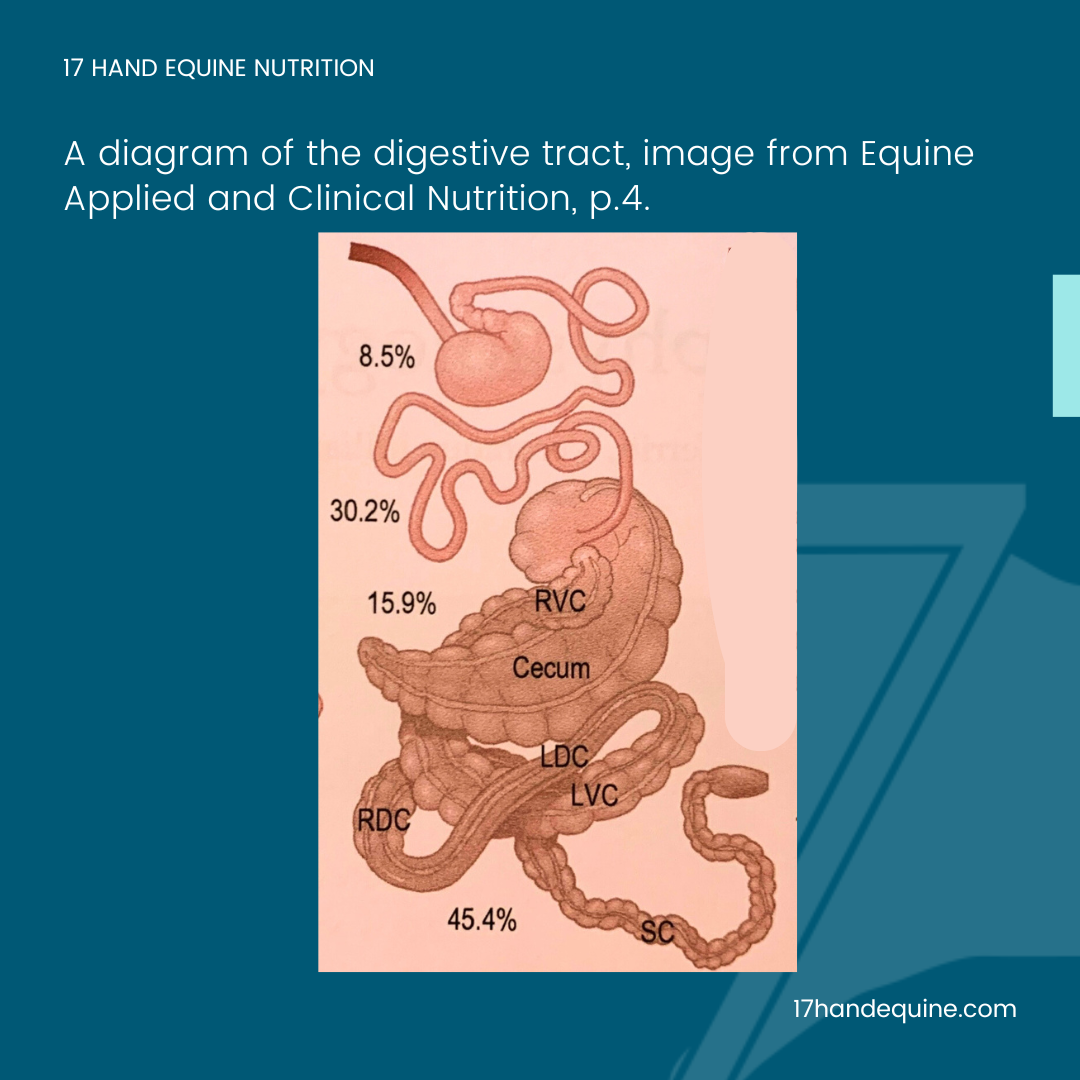
The hindgut has four key components:
Cecum:
Huge microbial population
Fermentation of fiber
Vitamin synthesis (B & K)
Large colon:
Nutrient absorption (water, volatile fatty acids, calcium, sodium, chloride)
Small colon
Fecal ball formation
Rectum
Fecal ball formation
Horses are classified as monogastric hindgut fiber fermentors. In order to process and use fiber for energy, the horse developed a unique digestive tract. Their digestive organs function differently than say a cow or a dog, due to the fermentation process of the large intestine (aka hindgut). The fiber is fermented by a large microbial population in the cecum and transformed into usable volatile fatty acids, providing energy to the horse.
The horse makes all the B and K vitamins they need by synthesizing them in the hindgut. This includes biotin! A healthy horse makes their daily biotin requirement all by themselves.
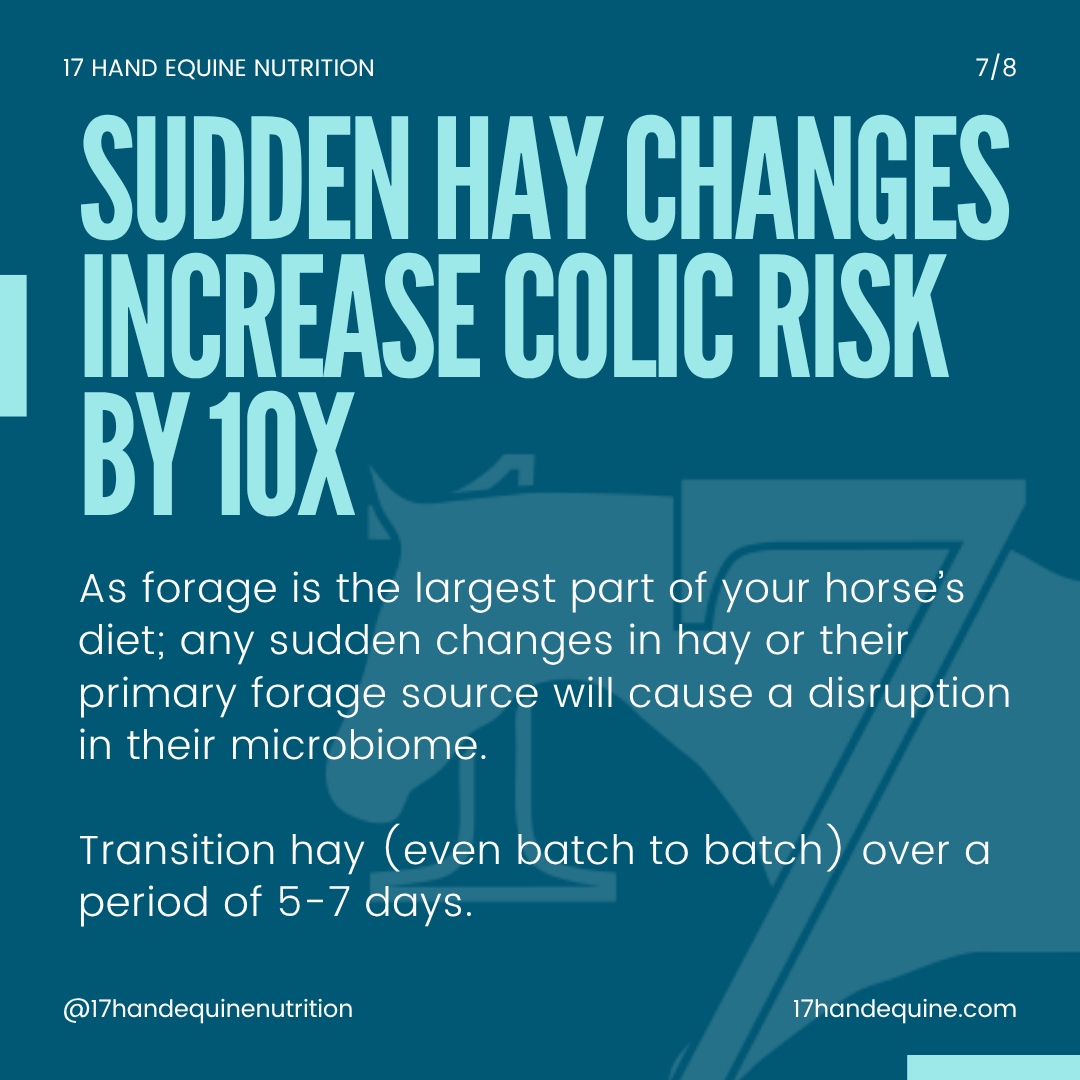
Disruption of the microbial population has a direct effect on the horse. Always introduce new feeds slowly in order for these good bugs to get used to the new hay or feed and properly digest them.
The best tips for keeping the hindgut microbiome happy:
Consistent flow of fiber
Gradual changes in the diet (even between hay batches!)
Without these beneficial bacteria, fiber digestion would not be possible!
References
Cothran, E. G. (n.d.). Evolution of the horse. Encyclopædia Britannica. https://www.britannica.com/animal/horse/Evolution-of-the-horse
Kauter et al. Animal Microbiome (2019) 1:14 Animal Microbiome
Merritt, A. M., & Julliand, V. (2013). Gastrointestinal physiology. In Equine Applied and Clinical Nutrition (pp. 3–26). essay, Elsevier Ltd.